Global Witness first exposed the problem of blood diamonds in 1998 and played a key role in establishing the Kimberley Process (KP), a government-led certification scheme, initiated in a bid to clean up the diamond trade. The scheme was launched in 2003 and requires member states to set up an import and export control system for rough diamonds. Over 75 of the world's diamond producing, trading and manufacturing countries participate in the scheme.
Its limitations:
- It has a narrow definition of conflict diamonds: Conflict diamonds are defined by the Kimberley Process as ‘rough diamonds used by rebel movements to finance wars against legitimate governments’. As a result of this narrow definition, the Kimberley Process is not empowered to address the broader range of risks to human rights posed by the trade in diamonds, such as those which have been documented in Zimbabwe.
- It has persistently refused to broaden this definition, despite pressure from a range of civil society organisations. It has faced persistent enforcement issues throughout its short history: the situation in Central African Republic (CAR) is the latest example - despite placing an embargo on diamonds sourced from CAR in 2013, conflict diamonds sourced from areas under the control of armed groups in the country still reached international markets.
- It applies only to rough diamonds: As the Kimberley Process applies only to rough diamonds, once stones are cut and polished, they are no longer covered by the scheme.
The diamond trade undertook to deliver a meaningful and independently verifiable system of warranties but has yet to deliver on that commitment. Ultimately, loopholes in the Kimberley Process and the failure to effectively adapt to address a broader range of human rights concerns means that diamonds associated with abuses are still contaminating global markets.
Persistent and unresolved concerns over these issues led Global Witness to resign as an official Observer of the Kimberley Process in 2011. The past decade has proven that the Kimberley Process cannot clean up the diamond sector on its own.
Global Witness is calling on diamond companies, and the diamond industry as a whole, to play its role in breaking links with human rights abuses by conducting supply chain checks known as human rights due diligence
-
Financing a Parallel Government
Zimbabwe’s Central Intelligence Organisation (CIO) appears to have received off budget financing from a Hong Kong-based businessman, Sam Pa.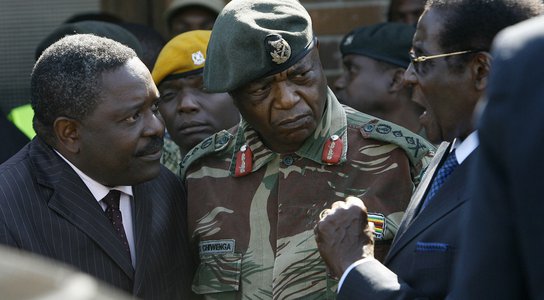
-
Conflict Diamonds
The illicit trade in diamonds has funded wars and human rights abuses for decades. Global Witness was the first organisation to bring this issue to the world’s attention. Despite positive steps, the links between diamonds and abuse will only be fully broken when all companies involved in the trade change their behaviour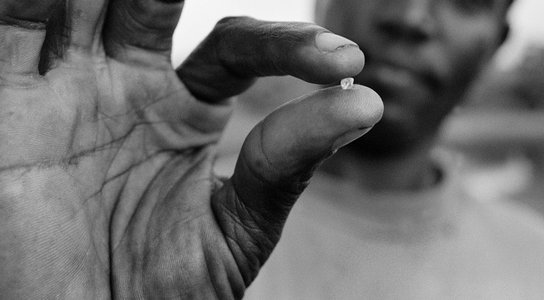
-
Tenders and vendors—Zimbabwe’s ailing economy and another Dubai diamond sale
Close to a million carats of Zimbabwe diamonds are up for sale in Dubai this week, with authorities reportedly hoping to sell them for an average of US$100 per carat